Here's a breakdown:
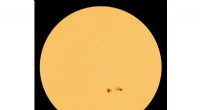
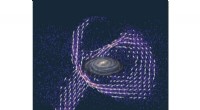
* Solar Wind: The Sun constantly releases a stream of charged particles, mostly protons and electrons. This stream is called the solar wind.
* Earth's Magnetic Field: Earth has a magnetic field that surrounds the planet. It acts like a giant shield, protecting us from the harmful radiation of the solar wind.
* Interaction: When the solar wind encounters Earth's magnetic field, some of the charged particles are trapped and channeled towards the Earth's poles.
* Aurora Borealis (Northern Lights) & Aurora Australis (Southern Lights): These particles then collide with atoms and molecules in Earth's upper atmosphere (thermosphere). The collisions excite these atoms, which then release energy in the form of light. This light is what we see as the auroras.
Different colors of the aurora are caused by the different gases in the atmosphere:
* Green: Most common, caused by oxygen at higher altitudes.
* Red: Less common, also caused by oxygen, but at even higher altitudes.
* Blue: Caused by nitrogen at lower altitudes.
* Purple/Violet: A combination of red and blue from oxygen and nitrogen.
So, the particles from the Sun's solar wind, interacting with Earth's magnetic field and atmosphere, create the beautiful and mesmerizing spectacle of the Northern Lights.