1. Formation of the Solar System:
* The theory states that the solar system formed from a giant cloud of gas and dust called the solar nebula.
* This cloud collapsed under its own gravity, forming a spinning disk with a proto-sun at the center.
* As the disk cooled and condensed, solid particles began to clump together, forming planetesimals.
2. Differentiation and Planetary Accretion:
* Inner Solar System: In the inner regions, closer to the sun, temperatures were high enough to vaporize volatile materials like water ice and methane. Only rocky materials survived, leading to the formation of the terrestrial planets (Mercury, Venus, Earth, and Mars).
* Outer Solar System: In the outer regions, beyond the frost line, temperatures were cooler, allowing volatile materials to condense into ice. This led to the formation of the gas giants (Jupiter, Saturn, Uranus, and Neptune), which also accreted rocky materials.
3. Asteroid Belt Formation:
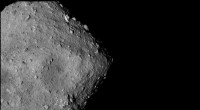
* The asteroid belt, located between Mars and Jupiter, represents a region where planetesimals never fully coalesced into a planet.
* The gravitational influence of Jupiter, a massive planet, disrupted the formation of a planet in this region, scattering planetesimals and preventing them from merging.
* This leftover material, mostly rocky and metallic, forms the asteroid belt.
4. Asteroid Composition and Location:
* The solar nebula theory also explains the composition of asteroids.
* Asteroids closer to the sun are primarily composed of rock and metal, reflecting the inner solar system conditions.
* Asteroids further out, towards the outer edge of the belt, may contain more ice and volatile materials.
In summary, the solar nebula theory:
* Provides a context for the formation of the solar system and its various components.
* Explains why the asteroid belt exists, situated between Mars and Jupiter.
* Accounts for the composition of asteroids, with different materials reflecting their position in the solar nebula.
This theory, coupled with observations and analysis of asteroids, helps us understand their origins, distribution, and the potential role they played in the early solar system.