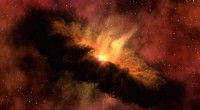
Here's a breakdown of key characteristics of a celestial body:
Key Characteristics:
* Naturally Occurring: It must be formed through natural processes, not human-made.
* Located in Space: It must exist outside of Earth's atmosphere.
* Gravitational Influence: It must have enough mass to exert a gravitational influence on other objects, even if it's very small.
Categories of Celestial Bodies:
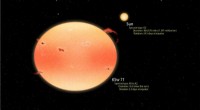
* Stars: Giant balls of hot gas that produce their own light and heat through nuclear fusion.
* Planets: Objects that orbit a star and are large enough to have cleared their orbital path of other objects.
* Moons: Objects that orbit a planet or other celestial body.
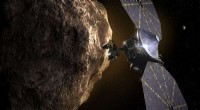
* Asteroids: Rocky or metallic bodies, much smaller than planets, that orbit the Sun, primarily found in the asteroid belt between Mars and Jupiter.
* Comets: Icy bodies that orbit the Sun in highly elliptical paths, often leaving behind a trail of gas and dust.
* Dwarf Planets: Objects that orbit the Sun and are large enough to be rounded by their own gravity, but haven't cleared their orbital path.
* Natural Satellites: Any object that orbits a planet or other celestial body, including moons.
* Interstellar Dust and Gas: The diffuse matter that fills the space between stars.
* Black Holes: Regions of spacetime where gravity is so strong that nothing, not even light, can escape.
Note: This is not an exhaustive list, as there are many other types of celestial bodies. The definition of a celestial body is constantly evolving as our understanding of the universe expands.