Process:
* Star formation: This is the most general term, referring to the entire process of stars being born from collapsing clouds of gas and dust.
* Stellar nursery: This is a poetic term for a region where stars are forming.
* Cloud collapse: This refers to the specific process by which a dense cloud of gas and dust collapses under its own gravity, leading to the formation of a protostar.
* Accretion: This describes the process of a protostar growing by pulling in surrounding material.
Environment:
* Molecular cloud: These are cold, dense clouds of gas and dust where star formation occurs.
* Giant molecular cloud (GMC): These are the largest and most massive molecular clouds, capable of forming hundreds or even thousands of stars.
* Star cluster: A group of stars that formed from the same cloud of gas and dust.
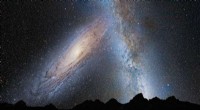
* Spiral arm: These are regions of active star formation within spiral galaxies.
* Supernova remnant: The expanding shell of gas and dust created by a supernova explosion can trigger new star formation.
It's important to note that these terms are not mutually exclusive. For example, a stellar nursery could be located within a giant molecular cloud, and star formation might be triggered by a supernova remnant.
So, when you talk about star formation, it's important to be specific about what aspect of the process you're referring to.