Credit: CC0 Public Domain
(Phys.org)—Jason Wright, an astronomy professor at Penn State, has uploaded a paper to the arXiv preprint sever that addresses the issue of whether we have looked hard enough for extinct alien life—particularly intelligent forms of extraterrestrial life. In his paper, he questions whether enough effort is being put into looking for evidence of space-faring alien life forms (technosignatures) that are now extinct but who might have left behind evidence of their existence here in our own solar system—everything here is much closer, he notes, than the next-nearest star system.
To be clear, Wright is not suggesting that he believes such forms of life once existed or that there is any evidence of them, as some in the media have suggested. Instead, he is merely suggesting that as part of a thorough search for alien life forms, we ought to include those that might once have been nearby, but who, for whatever reason, either left or went extinct. He notes that most current research involved in looking for life beyond Earth is focused on finding biosignatures—evidence of extraterrestrial life that is still alive today, including simple microbes.
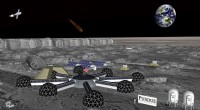
Evidence of extinct aliens would likely be difficult if not impossible to find on Earth, he notes, due to plate tectonics, weather etc., if timelines of millions of years are considered. But other bodies in the solar system are capable of holding onto material for very long time periods due to subsurface features that offer protection from meteor strikes and solar radiation—examples might include asteroids or moons, which, if aliens did ever visit our solar system, would have provided both shelter and privacy. He notes that technosignatures could come in a variety of forms—from evidence of mining to materials that could not have formed naturally.
Wright suggests that some effort ought to be made seeking technosignatures, both here on our home planet (in rock that is millions or even billions of years old, perhaps) and as we study planets, their moons and other objects in the solar system capable of harboring evidence.
© 2017 Phys.org