Astronomy
* Focus: Objects in space, their properties, and their behavior.
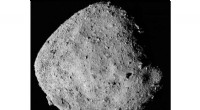
* Scope: Studies individual celestial objects like stars, planets, galaxies, nebulae, etc.
* Methods: Observation and analysis of light and other electromagnetic radiation from space.
* Examples: Measuring the size of a star, analyzing the composition of a nebula, tracking the movement of a comet.
Cosmology
* Focus: The universe as a whole, its origin, evolution, structure, and ultimate fate.
* Scope: Studies large-scale structures like the cosmic microwave background radiation, the distribution of galaxies, and the expansion of the universe.
* Methods: Theoretical models, simulations, and observations of the universe's large-scale properties.
* Examples: Studying the Big Bang theory, the formation of galaxies, the nature of dark matter and dark energy.
In essence:
* Astronomy is the study of the "what" of the universe, while cosmology is the study of the "why" and "how" of the universe.
Think of it this way:
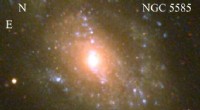
* An astronomer might study a particular galaxy, while a cosmologist might study how galaxies are distributed throughout the universe and how they formed.
While they are distinct fields, they are closely intertwined. Astronomy provides data and observations that cosmologists use to refine their theories, and cosmological theories provide context and frameworks for astronomical observations.