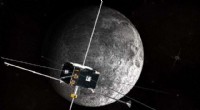
* The Moon is always within a few degrees of the ecliptic: This is because the Moon orbits the Earth, and Earth's orbit around the Sun defines the ecliptic plane. The Moon's orbit is slightly inclined to the ecliptic (about 5 degrees), so it appears to move slightly above and below the ecliptic path in the sky.
* The visible planets are generally within a few degrees of the ecliptic: The planets in our solar system orbit the Sun in roughly the same plane. This means they will generally appear close to the ecliptic. However, there are some exceptions:
* Pluto is a dwarf planet and its orbit is significantly inclined to the ecliptic.
* Other minor planets and comets can have highly inclined orbits and appear far from the ecliptic.
So, while the Moon is always within a few degrees of the ecliptic, the visible planets, while generally close, can occasionally deviate further due to their orbital inclinations.
Here's a simple analogy: imagine a flat plate (the ecliptic plane) with the Sun in the center. The planets are like marbles rolling around the plate, while the Moon is a smaller marble rolling around the Earth, which itself is on the plate. The marbles might not perfectly follow the edges of the plate, but they'll generally stay close.