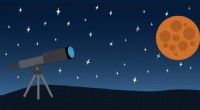
* The Earth appears stationary: We don't feel the Earth moving, and the stars and planets seem to move around us.
* The Sun and Moon appear to orbit the Earth: The Sun rises in the east and sets in the west, and the Moon goes through phases as if it were orbiting the Earth.
* The celestial objects appear to move in complex patterns: Planets, for example, appear to move forward, then backward, then forward again in a loop, a phenomenon called retrograde motion.
To explain these observations, the geocentric model proposed:
* The Earth is at the center: This was the fundamental assumption, with the Earth being stationary and everything else moving around it.
* The Moon orbits the Earth: This explained the Moon's phases and apparent motion.
* The Sun orbits the Earth: This explained the Sun's daily rising and setting.
* The planets orbit the Earth on smaller circles called epicycles: These epicycles were nested within larger circles called deferents. This complex system was designed to explain the observed retrograde motion of the planets.
The geocentric model was considered the most accurate explanation of the universe for over 1,400 years, from the time of the ancient Greek philosopher Aristotle (4th century BC) to the 16th century. It was challenged by the heliocentric model proposed by Nicolaus Copernicus, which placed the Sun at the center of the solar system, but the geocentric model remained dominant for a long time.
However, the geocentric model had some flaws:
* It failed to accurately predict planetary positions: The system of epicycles and deferents was complex and cumbersome, and it often failed to accurately predict the positions of planets.
* It lacked simplicity and elegance: The heliocentric model, in contrast, was simpler and more elegant, explaining planetary motion more naturally.
The geocentric model was eventually replaced by the heliocentric model, which provided a more accurate and simpler explanation of the universe. However, the geocentric model's influence on our understanding of the universe was profound and lasting.