The Basics:
* Gravity: The primary force that keeps objects in orbit. It's the attraction between any two objects with mass. The more massive an object, the stronger its gravitational pull.
* Motion: An object in orbit is constantly moving, and its motion is a balance between its inertia (tendency to move in a straight line) and the pull of gravity.
* Curve: The combination of gravity and motion causes the object to curve around the larger object. This curved path is the orbit.
Types of Orbits:
* Circular orbits: A perfectly circular path around a celestial body. These are relatively rare in nature.
* Elliptical orbits: The most common type of orbit. It's an oval-shaped path where the object is closer to the larger object at some points (perigee) and farther away at others (apogee).
* Geostationary orbits: A special type of orbit where the object appears stationary above a specific point on Earth. This is used for communications satellites.
* Polar orbits: Orbits that pass over the Earth's poles. This is used for weather satellites and remote sensing.
Examples:
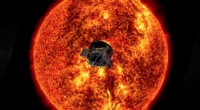
* The Earth orbiting the Sun: Our planet follows an elliptical path around the Sun, taking approximately 365 days to complete one orbit.
* The Moon orbiting the Earth: The Moon orbits the Earth in an elliptical path, taking about 27.3 days to complete one orbit.
* Satellites orbiting Earth: Artificial satellites, like those used for communication and GPS, are placed in various orbits around Earth.
Key Points:
* An object in orbit is not "floating" but is constantly falling towards the larger object due to gravity.
* The speed of an object in orbit determines the shape of its orbit. Faster speeds result in more elliptical orbits.
* Orbits are important for various space activities, including space exploration, communication, and navigation.
Let me know if you'd like to dive deeper into any specific aspect of orbits!