A sun-like star's life cycle can be broadly divided into several distinct stages:
1. Nebula (Birth):
- A massive cloud of gas and dust (mostly hydrogen and helium) collapses under its own gravity.
- As it contracts, the core heats up and becomes denser.
- This stage lasts for a few million years.
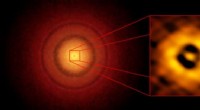
2. Protostar (Formation):
- The core reaches temperatures high enough for nuclear fusion to begin.
- Hydrogen atoms fuse to form helium, releasing tremendous energy.
- The protostar becomes a star and starts shining.
- This phase lasts for a few tens of millions of years.
3. Main Sequence (Stability):
- The star reaches a state of equilibrium, with the outward pressure from nuclear fusion balancing the inward pull of gravity.
- It spends most of its life in this phase, burning hydrogen into helium.
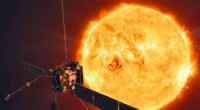
- Our Sun is currently in this stage.
- This stage can last for billions of years.
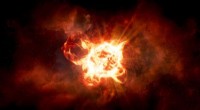
4. Red Giant (Expansion):
- The star runs out of hydrogen fuel in its core.
- The core contracts and heats up, igniting helium fusion in a shell around the core.
- The outer layers expand dramatically, becoming cooler and redder.
- This phase lasts for a few hundred million years.
5. Helium Flash (Instability):
- The core becomes so hot and dense that helium fusion occurs explosively.
- The star briefly becomes much brighter.
- This phase is short-lived, lasting only a few seconds.
6. Horizontal Branch (Stability):
- The star settles into a new equilibrium, fusing helium in its core.
- It remains stable for a few hundred million years.
7. Asymptotic Giant Branch (Expansion):
- The helium fuel in the core runs out.
- The star expands again, becoming a red giant once more.
- This phase lasts for a few tens of millions of years.
8. Planetary Nebula (Ejection):
- The star's outer layers are ejected into space, forming a colorful nebula.
- The core remains as a white dwarf, a hot, dense remnant.
- This phase lasts for tens of thousands of years.
9. White Dwarf (Cooling):
- The white dwarf slowly cools and fades over billions of years.
- Eventually, it becomes a black dwarf, a cold and dark stellar remnant.
Key Points:
- The lifespan of a sun-like star is determined by its mass. Larger stars live shorter, more intense lives.
- The sun is about halfway through its main sequence phase.
- The sun will eventually become a red giant, engulfing Mercury, Venus, and possibly Earth.
- The sun will then become a white dwarf, the final stage of its life.
This description provides a general overview of a sun-like star's life cycle. There are many details and variations within each stage, but this gives you a basic understanding of the journey these stars undertake.