Here's why:
* Detection Bias: Our current methods for finding exoplanets are more sensitive to large, gas-rich planets, particularly those orbiting close to their stars. These methods include:
* Transit Method: Detecting the dip in a star's brightness as a planet passes in front of it. Large planets cause a larger dip.
* Radial Velocity Method: Detecting the wobble of a star caused by a planet's gravitational pull. Massive planets cause a bigger wobble.
* Formation Processes: The early universe was likely rich in gas, which made the formation of gas giants easier.
However, the picture is evolving as we improve our detection methods. We are discovering more:
* Super-Earths: Rocky planets larger than Earth, but smaller than Neptune.
* Mini-Neptunes: Smaller gas giants with atmospheres and ice.
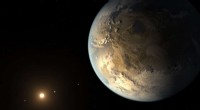
* Rocky planets in the habitable zone: Planets potentially capable of harboring liquid water on their surface.
While gas giants dominate the current exoplanet catalog, we're rapidly gaining a more diverse understanding of the planets orbiting other stars.