Here's a breakdown:
Mercury:
* Planet: It's a planet, the closest to the Sun.
* Size: Much larger than the Moon, about 38% the size of Earth.
* Composition: Mostly iron and nickel, with a thin rocky crust.
* Atmosphere: Extremely thin and negligible.
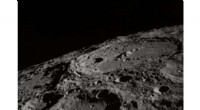
* Surface: Covered in craters and volcanic plains.
Earth's Moon:
* Natural Satellite: It orbits Earth, not the Sun.
* Size: Much smaller than Earth, about 1/4 the size of Earth.
* Composition: Primarily rock and dust, with a small core.
* Atmosphere: No significant atmosphere.
* Surface: Marked by craters, maria (dark volcanic plains), and mountains.
Key Differences:
* Size: Mercury is significantly larger than Earth's moon.
* Composition: Mercury is denser and composed mostly of heavy elements, while the moon is mostly rock and dust.
* Orbit: Mercury orbits the Sun, while the moon orbits Earth.
* Role in the solar system: Mercury is a planet, a major body within the solar system, while the moon is a satellite, orbiting a larger body.
In short, they are entirely different celestial objects with distinct characteristics and roles in our solar system.