* Scale: Spacecraft are incredibly small compared to planets and their gravitational influence. The difference in size is so vast that the gravitational gradient across the spacecraft is negligible. Tidal forces, which arise from differences in gravity, are simply too weak to rip a spacecraft apart.
* Strength: Spacecraft are designed to be structurally strong, capable of withstanding significant stresses and forces. They have to withstand the rigors of launch, the harshness of space, and various maneuvers. While a planet's gravity will exert a force, it's not enough to overcome the structural integrity of a spacecraft.
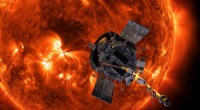
* Orbital Paths: Spacecraft are designed to follow specific orbital paths around planets. These paths are carefully calculated to avoid getting too close to the planet where tidal forces could become significant. Mission planners and engineers use sophisticated tools and simulations to ensure the safety of the spacecraft.
What Can Happen to Spacecraft Near Planets:
* Gravitational Pull: While not strong enough to cause tidal disruption, a planet's gravity can still influence a spacecraft's trajectory and speed. This is how gravitational assists (slingshots) work.
* Atmospheric Drag: If a spacecraft enters a planet's atmosphere, it will experience significant drag forces. These forces can slow down the spacecraft or even cause it to burn up, depending on the atmospheric density and the spacecraft's design.
* Radiation: Some planets, like Jupiter, have strong magnetic fields and intense radiation belts. Spacecraft passing through these regions can be exposed to harmful radiation, which can damage their electronics and instruments.
In Summary:
While planets exert significant gravitational pull, spacecraft are too small and too structurally sound to be tidally disrupted. However, they can still be affected by other forces like atmospheric drag, radiation, and gravitational influence on their trajectories.