1. Formation and Structure:
* Accretion: Gravity is the driving force behind the formation of celestial bodies. It pulls together dust and gas particles in space, causing them to clump together and grow in size.
* Star Formation: The immense gravitational pull of large clouds of gas and dust triggers the collapse of these clouds, leading to the formation of stars.
* Planet Formation: Planetary systems are formed from the accretion of material around young stars. Gravity pulls together smaller bodies, forming larger ones, eventually leading to planets.
2. Orbital Motion:
* Planetary Orbits: Gravity dictates the orbits of planets, moons, and other celestial objects around stars. The gravitational pull of the star keeps these objects in their orbits.
* Binary Star Systems: Two or more stars can be bound together by gravity, orbiting around their common center of mass.
* Galaxies: Galaxies are held together by the gravitational pull of the billions of stars and dark matter within them.
3. Tidal Forces:
* Tides: The gravitational pull of the Moon and the Sun creates tidal forces on Earth, causing the rise and fall of ocean waters.
* Tidal Locking: The gravitational interaction between celestial bodies can cause one body to become tidally locked to another. This means one side of the locked body always faces the other body (e.g., the Moon's rotation is tidally locked to the Earth).
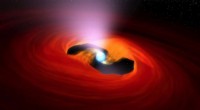
* Tidal Disruption: The intense gravitational pull of a black hole or neutron star can tear apart a star or other celestial objects, a process known as tidal disruption.
4. Evolution and Death of Stars:
* Stellar Fusion: The immense gravity within a star's core triggers nuclear fusion, the process that powers stars and allows them to shine.
* Stellar Evolution: Gravity plays a role in the evolution of stars, determining their lifespan, brightness, and eventual fate.
* Supernovae: When massive stars exhaust their nuclear fuel, they collapse under their own gravity, leading to a supernova explosion.
5. Other Effects:
* Gravitational Lensing: Massive objects, like galaxies and clusters, bend the fabric of spacetime. This bending can distort the light from distant objects, creating an effect called gravitational lensing.
* Black Holes: The ultimate consequence of gravity is the formation of black holes. These objects are so dense that their gravitational pull is so strong that nothing, not even light, can escape them.
In conclusion, gravity is the fundamental force that governs the formation, structure, motion, and evolution of celestial bodies. Its effects are incredibly diverse and play a key role in shaping the cosmos as we know it.