1. Star Formation:
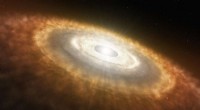
* Isolated Clouds: Stars form within giant clouds of gas and dust called nebulae. These clouds can be vast and contain enough material to form many stars.
* Gravitational Collapse: Within these clouds, denser regions start to collapse under their own gravity. This collapse often leads to the formation of multiple stars within a single cloud.
* Binary and Multiple Systems: It's estimated that around 85% of stars in the Milky Way are part of binary or multiple star systems. However, single stars are still common.
2. Dynamical Evolution:
* Ejections: In the early stages of star formation, some stars might be ejected from their systems due to gravitational interactions. These "runaway" stars become single.
* Star Collisions: While rare, stars can collide. This can either create a larger star or lead to a single star surviving the interaction.
3. Observation Bias:
* Proximity: We observe our Sun most closely, and it appears single. However, we might not always be able to easily distinguish binary systems that are far away.
In short:
While many stars form in multiple star systems, it's still possible for a star to form as a single entity within a nebula. The processes of star formation and dynamical evolution can lead to single stars becoming isolated. We might also have a bias in our observations due to our proximity to our Sun.