* Earth's Rotation: This is the primary reason for the stars' apparent movement. As the Earth spins on its axis, we, the observers, are moving with it. This movement makes it seem like the stars are moving across the sky. Think of it like sitting in a car and looking at trees outside the window. They seem to be moving backwards, even though you're the one moving.
* Earth's Revolution: As the Earth orbits the Sun, our perspective changes slightly over time. This causes the apparent positions of stars to shift very slowly over the course of a year. This effect is called stellar parallax.
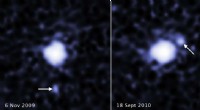
* Proper Motion: While stars appear fixed in the sky, they actually do move through space. This movement is called proper motion. However, these motions are so slow (typically fractions of an arcsecond per year) that they are barely noticeable over human lifetimes.
* Precession: This is a slow wobble in the Earth's axis of rotation, taking about 26,000 years to complete one cycle. It causes a gradual shift in the position of the celestial poles and the equinoxes, which in turn affects the apparent positions of stars over time.
In summary, the stars themselves are not actually moving across the sky. Their apparent motion is a result of our Earth's rotation, revolution, and its own subtle movements.