Here's a breakdown:
* Lunar Phases: The Moon doesn't emit its own light, it reflects sunlight. As the Moon orbits the Earth, the angle at which the Sun's light hits the Moon changes, resulting in different phases we see from Earth.
* New Moon: The Moon is positioned between the Sun and Earth. We see a dark, invisible Moon because the sunlit side faces away from us.
* Waxing Crescent: As the Moon moves away from the Sun, a small sliver of the sunlit side becomes visible.
* First Quarter: Half the Moon is illuminated, and the sunlit portion appears as a crescent shape.
* Waxing Gibbous: More than half of the Moon is illuminated, and the crescent shape continues to grow.
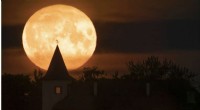
* Full Moon: The Earth is positioned between the Sun and Moon, so the entire sunlit side faces us.
* Waning Gibbous: The illuminated portion of the Moon begins to decrease.
* Last Quarter: Half of the Moon is again illuminated, but the sunlit portion appears as a crescent facing the opposite direction.
* Waning Crescent: The illuminated portion continues to shrink until the Moon returns to the New Moon phase.
The position of the Moon in its orbit around the Earth determines what portion of the illuminated surface we see.