Here's why:
* Space stations are relatively large: Space stations like the International Space Station (ISS) are massive structures, much larger than a star.
* Brightness: While space stations can reflect sunlight and appear as bright objects, they are not nearly as bright as stars, which are massive, self-luminous balls of gas.
* Movement: Space stations orbit the Earth, meaning they move across the sky. Stars, on the other hand, appear stationary from our perspective.
What you might be mistaking for a star:
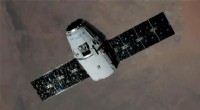
* Satellites: Some satellites can reflect sunlight and appear as bright, moving objects in the sky. These are sometimes mistaken for stars, especially if you're not familiar with their movement patterns.
* Planets: Planets like Venus and Jupiter can be very bright and appear like stars, but they move slowly across the sky over time.
To tell if it's a space station:
* Look for movement: Space stations move across the sky in a predictable pattern.
* Check online resources: Websites like Spot the Station can help you predict when and where to spot the ISS.
If you see a bright object in the sky, try to determine its characteristics to see if it's a star, planet, satellite, or space station!