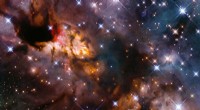
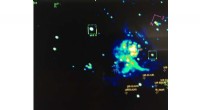
The nebular theory is the prevailing scientific model for the formation of our solar system. It proposes that the solar system formed from a giant cloud of gas and dust called a solar nebula.
Here's how it works:
1. Collapse: The nebula began to collapse under its own gravity, spinning faster and faster as it shrunk.
2. Flattening: The spinning cloud flattened into a disk, with most of the mass concentrating at the center.
3. Star Formation: The central mass grew hot and dense, eventually igniting nuclear fusion and forming the Sun.
4. Planetesimal Formation: Dust and gas particles within the disk began to clump together, forming larger and larger objects called planetesimals.
5. Planet Formation: Planetesimals continued to accrete, eventually forming the planets, moons, asteroids, and comets that we see today.
Four Subsystems Humans Depend On
The solar system can be divided into four main subsystems:
1. The Sun: The Sun is the central star of our solar system, providing the energy that sustains life on Earth.
2. The Inner Solar System: This region includes the four terrestrial planets (Mercury, Venus, Earth, and Mars) and the asteroid belt. It is characterized by rocky planets and relatively low mass.
3. The Outer Solar System: This region includes the four gas giants (Jupiter, Saturn, Uranus, and Neptune) and their many moons. It is characterized by gaseous planets and a vast expanse of space.
4. The Kuiper Belt and Oort Cloud: These are distant regions beyond Neptune, containing icy objects and comets. They are believed to be remnants of the early solar system.
Human Dependence:
While we don't directly depend on the Sun's energy, it drives our climate and the ecosystems we rely on. The Earth is a unique planet within the inner solar system, possessing the right conditions for life. The outer solar system provides resources like water and potential future colonization sites. The Kuiper belt and Oort cloud are sources of comets, which have brought water and organic molecules to Earth.
In short, all these subsystems play a vital role in the formation and continued existence of life on Earth. Understanding the nebular theory gives us insight into the origins of our planet and the delicate balance of our solar system.