1. Radio Communication:
* Reflection: The ionosphere acts as a mirror for radio waves, reflecting them back to Earth. This allows long-distance radio communication, particularly for shortwave radio, which is crucial for broadcasting, navigation, and emergency communication.
* Refraction: The ionosphere can also refract radio waves, bending them around obstacles like mountains or the Earth's curvature. This further enhances long-distance communication.
2. Space Weather:
* Protection from solar radiation: The ionosphere absorbs harmful ultraviolet radiation from the Sun, shielding life on Earth.
* Auroras: The ionosphere is where auroras (northern and southern lights) occur. These beautiful displays of light are caused by charged particles from the Sun interacting with the Earth's magnetic field and the ionosphere.
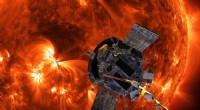
* Spacecraft communication: The ionosphere can affect the signals from satellites and spacecraft, which requires careful consideration in designing and operating these systems.
3. Atmospheric Research:
* Study of the upper atmosphere: The ionosphere provides valuable data about the composition, structure, and dynamics of the upper atmosphere, which is essential for understanding climate change and space weather.
* Climate change monitoring: Changes in the ionosphere can be linked to changes in the lower atmosphere, providing insights into climate change.
4. Navigation and Positioning:
* GPS and other navigation systems: The ionosphere can affect the accuracy of Global Positioning System (GPS) and other navigation systems. However, scientists are developing methods to account for these effects and improve navigation accuracy.
5. Other Applications:
* Remote sensing: The ionosphere can be used to remotely sense atmospheric conditions, such as temperature and density.
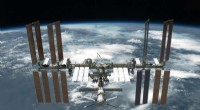
* Space exploration: Understanding the ionosphere is crucial for planning and executing space missions, as it can affect the performance of spacecraft and instruments.
In summary, the ionosphere plays a critical role in radio communication, space weather, atmospheric research, navigation, and other applications. Its importance stems from its unique properties and its influence on both natural and technological processes.