Here's why:
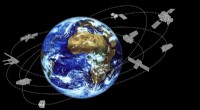
* Earth's Rotation: Sunset occurs because the Earth rotates on its axis. As the Earth turns, the observer's location faces away from the sun.
* Relative Motion: It's not the sun actually moving "down" that creates sunset, but rather the Earth's rotation changing the relative position of the observer and the sun.
Key points:
* Observer-centric: The definition of sunset is based on the moment the upper limb (top edge) of the sun disappears below the horizon from the perspective of an observer.
* Geographical Dependence: Sunset times vary based on the observer's latitude and longitude.
* Atmospheric Effects: Atmospheric refraction (the bending of light through the atmosphere) causes the sun to appear above the horizon even after it has technically set. This is why we experience a "false sunset" where the sun appears to be touching the horizon for a short while.
So, the frame of reference for sunset is the observer on Earth as they experience the sun's apparent descent below the horizon due to the Earth's rotation.