Mars, the "Red Planet," boasts a landscape both familiar and alien, offering a glimpse into a world sculpted by geological processes vastly different from Earth's.
Here's a breakdown of its key features:
1. The Red Dust:
* Mars is known for its rusty red color, due to iron oxide (rust) in its soil and rocks.
* This dust is incredibly fine and can be carried by strong winds, creating vast dust storms that can engulf the entire planet.
2. Volcanoes and Canyons:
* Olympus Mons: The largest volcano in the Solar System, towering 21.9 km (13.6 miles) high, three times taller than Mount Everest.
* Valles Marineris: A massive canyon system, stretching over 4,000 km (2,500 miles) long, seven times deeper than the Grand Canyon.
* Tharsis Bulge: A volcanic plateau, home to several massive volcanoes, including Olympus Mons.
3. Polar Ice Caps:
* Mars has both a north and south polar ice cap, primarily composed of water ice but also containing frozen carbon dioxide (dry ice).
* During the Martian winter, carbon dioxide condenses at the poles, creating a layer of dry ice.
4. Ancient Riverbeds and Lakes:
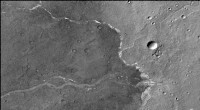
* Evidence of past water activity is plentiful, with river channels, deltas, and dried-up lake beds hinting at a once-wetter Mars.
* This suggests that liquid water may have flowed on the surface in the past, making Mars a more Earth-like environment.
5. Impact Craters:
* Mars is heavily cratered, evidence of its long history of bombardment by asteroids and meteoroids.
* Some craters are quite fresh, while others are worn down and eroded, revealing a timeline of Martian history.
6. Diverse Geology:
* Mars' landscape features diverse rock types, including basalt, sandstone, and carbonates.
* This diversity is a testament to the planet's complex geological history and the varied forces that shaped it.
7. A Thin Atmosphere:
* While Mars has an atmosphere, it is much thinner than Earth's, composed mainly of carbon dioxide.
* This thin atmosphere results in a significantly lower air pressure and contributes to the planet's cold, dry conditions.
8. Dynamic Processes:
* Mars is not a static world. It experiences dust storms, wind erosion, and even possible volcanic activity, albeit on a much smaller scale than in the past.
* These processes continue to shape the Martian landscape.
Exploring the Red Planet:
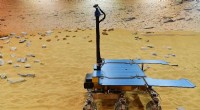
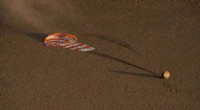
* Mars is the most explored planet in our solar system after Earth, with numerous robotic missions sending back incredible data about its landscape and potential for past life.
* Future missions aim to further unravel the mysteries of Mars, including the potential for past liquid water and possibly even microbial life.
The landscape of Mars is a captivating testament to the diverse and dynamic forces that have shaped the planets in our solar system. Its unique characteristics continue to inspire awe and fuel the quest for understanding the origins and evolution of our universe.