Here's why:
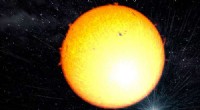
* Main sequence stars are in the longest and most stable phase of their lives. They are fusing hydrogen into helium in their cores, which releases energy and creates the light and heat we see.
* Stars spend the majority of their lives on the main sequence. This is why they make up such a large percentage of the stars we observe.
Other star types include:
* Red giants: Stars that have exhausted the hydrogen fuel in their cores and have expanded significantly.
* White dwarfs: The dense, hot remnants of stars that have shed their outer layers.
* Supergiants: Extremely large and luminous stars that are nearing the end of their lives.
* Neutron stars: Extremely dense remnants of massive stars that have collapsed under their own gravity.
* Black holes: Regions of spacetime where gravity is so strong that nothing, not even light, can escape.
These other star types are less common than main sequence stars because they represent relatively short stages in a star's lifetime.