1. Natural Light Sources: These are sources of light that occur naturally in the universe.
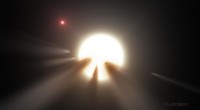
* Stars: Like our Sun, stars are massive balls of hot gas that emit light and heat through nuclear fusion.
* Other celestial bodies: Some planets reflect sunlight, and others emit their own light due to internal processes (e.g., Jupiter's moon Io).
* Lightning: A powerful discharge of static electricity in the atmosphere that produces bright flashes of light.
* Bioluminescence: Some living organisms produce their own light through chemical reactions (e.g., fireflies, jellyfish).
2. Artificial Light Sources: These are sources of light created by humans.
* Incandescent bulbs: Produce light by heating a filament until it glows.
* Fluorescent bulbs: Use electricity to excite gas atoms, which then emit light.
* LEDs (Light Emitting Diodes): Semiconductor devices that emit light when an electric current passes through them.
* Lasers: Devices that produce a highly focused beam of coherent light.
* Fire: A chemical reaction that releases heat and light.
So, while there are many different sources of light, they can be broadly categorized as natural or artificial.