Temperature:
* Much colder: Planets farther from the Sun receive significantly less sunlight and heat. This makes them much colder, with temperatures well below freezing.
* Frozen surfaces: Many outer planets have frozen surfaces, with icy moons and even frozen gases like methane and nitrogen.
Composition:
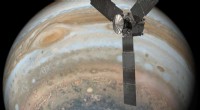
* Gaseous giants: The outer planets are mostly gas giants like Jupiter, Saturn, Uranus, and Neptune. They have a very small solid core, surrounded by thick layers of gas like hydrogen and helium.
* Less rocky material: Compared to the inner rocky planets, the outer planets have less rocky material and more lighter elements like hydrogen and helium.
Orbit and Rotation:
* Longer orbital periods: Because they are further from the Sun, the outer planets take much longer to complete a full orbit. For example, Jupiter takes almost 12 Earth years to orbit the Sun.
* Faster rotation: Surprisingly, many outer planets rotate much faster than the inner planets. This results in shorter days on those planets.
Moons:
* More and larger moons: Outer planets tend to have more moons, often with large and diverse sizes and compositions. Many of these moons are icy and potentially harboring oceans beneath their surfaces.
Other differences:
* More faint and difficult to observe: The outer planets are much fainter and harder to observe from Earth due to their distance.
* Stronger magnetic fields: The gas giants often have much stronger magnetic fields than the inner planets, which can affect their atmospheres and interactions with the Sun.
Here's a table summarizing some key differences:
| Feature | Inner Planets | Outer Planets |
|---------------------|---------------------------|------------------------------|
| Temperature | Warm/Hot | Very Cold |
| Composition | Mostly rocky | Gas giants (hydrogen, helium) |
| Orbital Period | Shorter | Longer |
| Rotation Speed | Slower | Faster |
| Number of Moons | Few | Many |
| Magnetic Field | Weaker | Stronger |
| Observability | Easier to observe | Fainter and harder to observe |