Supernovae are the death throes of massive stars:
* Nuclear Fusion: Stars like our Sun fuse hydrogen into helium in their cores, generating energy and outward pressure that counteracts gravity.
* Heavier Elements: As the star runs out of hydrogen, it starts fusing heavier elements like carbon, oxygen, and eventually iron.
* Iron's Problem: Iron fusion does not release energy, but requires it. This creates an imbalance, and the core collapses inwards.
* Catastrophic Collapse: The core collapses incredibly quickly, generating immense heat and pressure.
* Supernova Explosion: This collapse triggers a shockwave that rips through the star, expelling its outer layers into space in a spectacular explosion known as a supernova.
Smaller stars like our Sun have a different fate:
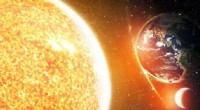
* Red Giant Phase: After exhausting their hydrogen, they expand into red giants, engulfing their inner planets.
* White Dwarf: Eventually, the outer layers are shed, leaving behind a dense core called a white dwarf.
* Planetary Nebula: The expelled gas forms a beautiful shell known as a planetary nebula.
So, only massive stars have the fuel and conditions to experience a supernova. Smaller stars die a less dramatic but still fascinating death.