Here's why:
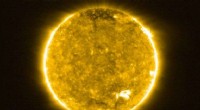
* The Sun is a star. It's a giant ball of hot gas that produces light and heat through nuclear fusion.
* Stars come in different sizes. Some are much smaller than our Sun, while others are absolutely enormous.
Here's a breakdown:
* Our Sun is a medium-sized star. It's classified as a yellow dwarf.
* Red dwarfs: These are the smallest and most common type of star. They're much smaller and cooler than our Sun.
* Giants and supergiants: These stars are much larger and brighter than our Sun. Some are hundreds of times bigger!
* Neutron stars: These are incredibly dense, collapsed cores of massive stars. They're only a few miles across but have a mass greater than our Sun.
So, to answer your question, it depends on which star you're comparing it to:
* Compared to a red dwarf: Our Sun is much bigger.
* Compared to a giant or supergiant: Our Sun is much smaller.
* Compared to a neutron star: Our Sun is much bigger in size but less dense.
Let me know if you'd like to know more about specific types of stars!