Protostar:
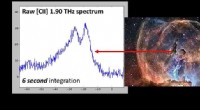
* Formation: A protostar is a very young, pre-stellar object that forms from a dense cloud of gas and dust called a nebula.
* Energy source: A protostar derives its energy primarily from gravitational contraction. As the cloud collapses, it heats up due to the conversion of gravitational potential energy into thermal energy.
* Temperature: A protostar is hot, but not hot enough to initiate nuclear fusion. It typically has a temperature of around 1,000 to 10,000 Kelvin.
* Luminosity: Protostars are relatively faint and emit in the infrared spectrum.
* Structure: They are still forming and lack a defined core. They are surrounded by a thick disk of gas and dust.
* Evolution: Protostars evolve over time as they continue to collapse and heat up.
Star:
* Formation: A star is formed when a protostar reaches a high enough temperature and pressure in its core to initiate nuclear fusion.
* Energy source: A star derives its energy primarily from nuclear fusion, where hydrogen atoms fuse to form helium, releasing tremendous amounts of energy.
* Temperature: Stars have much higher temperatures than protostars, typically ranging from 3,000 to 50,000 Kelvin (and even higher for some types of stars).
* Luminosity: Stars are significantly brighter than protostars, emitting light across a broader spectrum.
* Structure: Stars have a well-defined core, radiative zone, convective zone, and atmosphere.
* Evolution: Stars spend the majority of their lives fusing hydrogen in their core. Their evolution is driven by the nuclear fusion processes and the balance between gravity and outward pressure.
In essence: A protostar is a "baby star" still in its early stages of formation, while a star is a mature celestial object that has begun sustained nuclear fusion.