1. Giant Molecular Clouds (GMCs):
- The journey begins in vast, cold, and dense clouds of gas and dust called GMCs. These clouds are primarily composed of hydrogen and helium, with traces of heavier elements.
- These clouds are the "star nurseries" of the universe.
2. Gravitational Collapse:
- Within these clouds, tiny fluctuations in density can cause gravity to pull more matter together.
- As more matter is pulled in, the density and pressure at the center of the cloud increase, creating a core.
3. Protostar Formation:
- The core continues to collapse, heating up due to the increasing pressure. Eventually, the core becomes so hot that it starts to glow, forming a protostar.
- This stage can last for tens of thousands to millions of years.
4. Nuclear Fusion Ignition:
- As the protostar continues to accrete matter, its core becomes incredibly hot and dense.
- At a critical point, the temperature and pressure become so extreme that nuclear fusion begins.
- This is the key process in star formation: hydrogen nuclei fuse to form helium, releasing enormous amounts of energy.
5. Main Sequence Star:
- Once nuclear fusion is sustained, the protostar becomes a true star, entering the main sequence stage of its life.
- The star now has a balance between the inward force of gravity and the outward pressure from nuclear fusion.
- The star will spend the majority of its lifetime in this stable state.
6. Evolution and Beyond:
- Over time, the star's core will run out of hydrogen fuel. This leads to various evolutionary stages, depending on the star's mass.
- Stars like our Sun will eventually become red giants, then white dwarfs.
- More massive stars will go through a supernova explosion, leaving behind remnants like neutron stars or black holes.
Key Points:
* Gravity: The driving force behind star formation is gravity, which pulls matter together.
* Nuclear Fusion: This process is the source of energy for stars, and it's what makes them shine.
* Mass: The mass of a star determines its lifespan and eventual fate. More massive stars burn hotter and faster, leading to shorter lifespans.
* Ongoing Process: Star formation is an ongoing process in the universe, constantly creating new stars and shaping the cosmos.
Observation and Evidence:
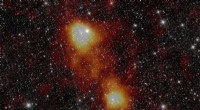
* Telescopes: Powerful telescopes allow astronomers to observe star-forming regions, like the Orion Nebula, and study the various stages of the process.
* Computer Models: Scientists use sophisticated computer models to simulate star formation, helping them understand the intricate physics involved.
Star formation is a complex and fascinating process, and scientists continue to learn more about it through ongoing observations and research.