Here's why:
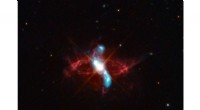
* Protostars are massive clouds of gas and dust that are collapsing under their own gravity. They are very hot, but not hot enough for nuclear fusion to occur.
* Nuclear fusion is the process where atomic nuclei combine to form heavier nuclei, releasing tremendous amounts of energy.
* When a protostar's core reaches a temperature of about 10 million Kelvin, the pressure and density are high enough for hydrogen nuclei to fuse into helium nuclei. This process is called hydrogen burning.
* The energy released by nuclear fusion creates outward pressure that balances the inward pull of gravity. This marks the birth of a true star.
So, the moment nuclear fusion begins in the core of a protostar is the moment it transitions into a star.