1. Visual Observations:
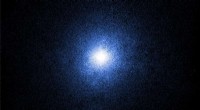
* Optical Telescopes: SNRs can be observed in visible light, often appearing as faint, diffuse nebulae. They may exhibit filamentary structures, shock waves, and even pulsars at their center.
* X-ray Telescopes: X-ray telescopes are particularly effective at detecting SNRs, as the hot gas within them emits strongly in this wavelength.
* Radio Telescopes: Radio telescopes can also detect SNRs, as the electrons within them emit synchrotron radiation.
2. Spectroscopic Analysis:
* Spectral Lines: By analyzing the spectral lines emitted from SNRs, astronomers can determine their composition, temperature, and velocity. The presence of specific elements like oxygen, silicon, and sulfur is a strong indicator of a supernova explosion.
* Doppler Shifts: The Doppler shift of spectral lines can be used to determine the expansion velocity of the remnant.
3. Morphological Features:
* Shell-like Structure: SNRs often exhibit a shell-like structure, with a distinct boundary between the expanding ejecta and the surrounding interstellar medium.
* Filamentary Structures: Filaments are common features within SNRs, indicating the presence of shock waves.
* Pulsar at the Center: Some SNRs contain a pulsar, which is a rapidly rotating neutron star that emits radio waves.
4. Other Properties:
* Age: The age of an SNR can be estimated based on its size and expansion velocity.
* Distance: The distance to an SNR can be determined using various methods, such as parallax or standard candles.
5. Specific Catalogues:
* The Catalogue of Supernova Remnants (SNRcat): This catalogue contains information on over 300 known SNRs, including their coordinates, size, age, and other properties.
* The Green Catalog: This catalogue focuses on radio-emitting SNRs.
By combining these different methods, astronomers can confidently identify supernova remnants and study their evolution and properties.