Simple Examples:
* Observing the night sky: Looking up at the stars, identifying constellations, and noticing the movement of celestial objects (like the moon or planets).
* Using a telescope: Enlarging the view of the night sky to see fainter stars, planets, and even galaxies.
* Tracking the phases of the moon: Observing how the moon's shape changes over time.
More Complex Examples:
* Studying the life cycle of stars: Investigating how stars form, evolve, and eventually die.
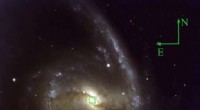
* Analyzing light from distant galaxies: Using spectroscopy to determine the composition, temperature, and motion of galaxies.
* Searching for exoplanets: Looking for planets orbiting other stars using various techniques like the transit method or the radial velocity method.
* Modeling the formation and evolution of the universe: Using computer simulations to understand the Big Bang and the large-scale structure of the cosmos.
Professional Examples:
* Working at an observatory: Operating telescopes, collecting data, and analyzing astronomical observations.
* Conducting research on specific celestial objects: Studying black holes, neutron stars, or the properties of specific galaxies.
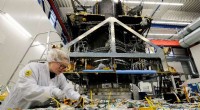
* Developing new technologies for astronomy: Designing advanced instruments and space telescopes.
* Teaching astronomy at universities: Educating students on the wonders of the universe and the latest discoveries.
These examples demonstrate the breadth of astronomy, from simple observation to advanced scientific research.