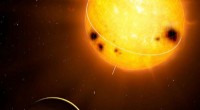
1. Gravity: Stars are born from giant clouds of gas and dust. Gravity pulls these particles together, causing the cloud to collapse and heat up.
2. Pressure and Heat: As the cloud collapses, the core becomes incredibly dense and hot. The immense pressure and heat cause the atoms in the core, mostly hydrogen, to smash together.
3. Fusion: When hydrogen atoms fuse, they form helium. This process releases an enormous amount of energy in the form of light and heat. This energy is what makes stars shine.
4. Energy Flow: This energy travels outward through the star, eventually escaping into space as light and heat.
In short, stars are giant fusion reactors that convert hydrogen into helium, releasing energy in the process.
Here's a simplified analogy:
Imagine you have a bunch of tiny balls (hydrogen atoms) that you want to stick together (fuse). You need a lot of pressure and heat to do that. When they finally stick together, they release a burst of energy (like a tiny explosion). This energy is what makes the star shine.
Important Points:
* The fusion process requires incredibly high temperatures and pressures, which only exist in the core of stars.
* The type of fusion that happens in a star depends on its size and age. Larger stars fuse heavier elements, while smaller stars primarily fuse hydrogen.
* Stars are constantly converting hydrogen into helium, and this process will eventually run out. When a star exhausts its fuel, it will evolve into a different type of star, like a white dwarf, neutron star, or black hole.