1. Dust and Gas Obscuration:
* Star birth happens within dense clouds of gas and dust, which are incredibly opaque to visible light.
* These clouds absorb and scatter most of the light emitted by young stars, making them extremely hard to see directly.
2. Short Lifespan of the Birthing Process:
* The actual process of star formation is relatively short, lasting only a few million years.
* This is a blink of an eye in cosmic time, making it a challenging target to catch in action.
3. Distant Location:
* Most star-forming regions are located far from Earth, further hindering our ability to observe them in detail.
* This distance leads to faintness, making them even harder to observe.
4. Complexity of the Process:
* Star birth is a complex process involving gravitational collapse, accretion, and outflows.
* Understanding and modeling these processes requires sophisticated instruments and techniques.
5. Limited Observational Tools:
* While traditional optical telescopes struggle with dust obscuration, astronomers have developed tools to overcome this challenge:
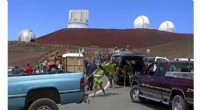
* Infrared telescopes: These can penetrate dust clouds because infrared radiation is less easily absorbed.
* Submillimeter telescopes: These are even better at seeing through dust and can observe the cold, dense gas where stars are born.
* Radio telescopes: These can detect the radio waves emitted by the gas and dust surrounding young stars.
Despite the challenges, astronomers are making significant progress in understanding star formation thanks to these advanced tools and techniques. They are constantly refining their models and observations, providing us with ever-increasing knowledge about the birth of stars.