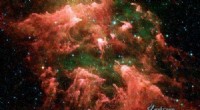
Here's a breakdown:
* Supernova: When a massive star (at least 8 times the mass of our sun) runs out of fuel, it collapses under its own gravity in a catastrophic explosion.
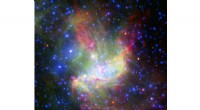
* Supernova Remnant: The expanding cloud of gas and dust that is ejected from the star during the supernova. It's a incredibly energetic and complex environment.
* What's left behind: Depending on the size of the original star, the supernova can leave behind a neutron star or a black hole.
Supernova remnants are fascinating objects to study because they:
* Provide insights into stellar evolution: Studying their composition and structure reveals information about the star's life and death.
* Are sources of new elements: The supernova explosion creates heavy elements that were not present in the original star.
* Trigger star formation: The shockwaves from supernovae can compress interstellar gas and trigger the formation of new stars.
Some famous supernova remnants include:
* Crab Nebula: One of the most studied supernova remnants, visible in the constellation Taurus.
* Cassiopeia A: The youngest known supernova remnant in our galaxy.
* Vela Supernova Remnant: A large and complex remnant visible in the constellation Vela.