The Sun's Atmosphere:
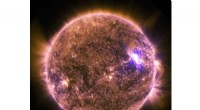
* The Photosphere: This is the visible surface of the Sun, where light we see is emitted. It's a thin layer, about 500 kilometers deep.
* The Chromosphere: This is a layer above the photosphere, extending about 2,000 kilometers. It's characterized by its reddish color and the presence of spicules – jets of hot gas.
* The Corona: This is the outermost layer of the Sun's atmosphere, extending millions of kilometers into space. It's incredibly hot (millions of degrees Celsius) and emits a constant stream of charged particles called the solar wind.
Why is the Sun's atmosphere different from Earth's?
* Composition: The Sun's atmosphere is primarily composed of hydrogen and helium, while Earth's atmosphere is mostly nitrogen and oxygen.
* Temperature: The Sun's atmosphere is incredibly hot, with the corona reaching millions of degrees Celsius. Earth's atmosphere has a much lower temperature, ranging from -85°C in the stratosphere to around 15°C near the surface.
* Density: The Sun's atmosphere is very thin and less dense than Earth's atmosphere.
* Gravity: The Sun's strong gravity keeps its atmosphere bound to it.
Key takeaway: While the Sun has an atmosphere, it's vastly different from Earth's in its composition, temperature, density, and how it interacts with the star.