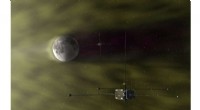
1. Transit of Venus:
* How it works: This method involves observing the transit of Venus across the face of the Sun. By precisely timing the duration of the transit from different locations on Earth, and using the known distance between Earth and Venus, the Sun's radius can be calculated using trigonometry.
* Limitations: This method is only possible when Venus transits the Sun, which happens rarely (about once every 100 years). It requires precise timing and location data.
2. Solar Eclipse:
* How it works: During a total solar eclipse, the Moon completely blocks the Sun's disk. By observing the size of the Moon's shadow on Earth, and knowing the distance between the Moon and Earth, we can calculate the Sun's radius.
* Limitations: This method relies on accurate measurements of the shadow size and the Moon's distance, which can be challenging.
3. Helioseismology:
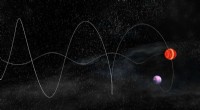
* How it works: This method uses the study of solar oscillations (sound waves traveling through the Sun) to create a model of the Sun's internal structure. By analyzing these oscillations, we can determine the Sun's radius and other properties like its density and composition.
* Limitations: While powerful, this method relies on complex mathematical modeling and requires extensive data analysis.
4. Direct Measurements from Spacecraft:
* How it works: Spacecraft like SOHO (Solar and Heliospheric Observatory) and SDO (Solar Dynamics Observatory) have instruments that directly measure the Sun's diameter.
* Limitations: Spacecraft measurements are limited by the resolution of their instruments and the distance to the Sun.
Current Best Estimate:
The current best estimate for the Sun's radius is 695,700 kilometers (432,288 miles). This value is obtained by combining data from various methods, including helioseismology and spacecraft observations.
It's important to note that the Sun's radius is not constant. It can fluctuate slightly due to various factors, such as solar activity and internal processes. However, these fluctuations are relatively small compared to the overall size of the Sun.