1. Telescopes:
* Ground-based telescopes: Using powerful lenses and mirrors, these telescopes observe planets from Earth. They capture light and other radiation, allowing scientists to study the planet's atmosphere, surface features, and even its composition.
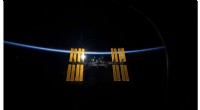
* Space telescopes: Launched into orbit, these telescopes offer a clearer view of planets, free from Earth's atmosphere's distortion. Examples include the Hubble Space Telescope and the James Webb Space Telescope, which have revolutionized our understanding of planets.
2. Spacecraft:
* Flybys: Spacecraft quickly pass by a planet, capturing images and collecting data as they zoom past.
* Orbiters: Spacecraft enter orbit around a planet, allowing for prolonged observation and detailed mapping.
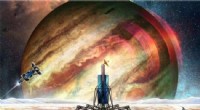
* Landers and rovers: These robotic probes land on a planet's surface to collect samples, conduct experiments, and study the planet's geology and atmosphere firsthand.
3. Spectroscopy:
* Analyzing the light emitted or reflected from a planet allows scientists to identify the elements and molecules present in its atmosphere, surface, and even its interior.
4. Radar:
* Sending radar signals towards a planet and analyzing the reflected waves can help scientists map the planet's surface, revealing its topography and the presence of water, ice, or other materials.
5. Gravity measurements:
* Studying how a planet's gravity affects nearby objects can help determine its mass, density, and internal structure.
6. Studying meteorites:
* Meteorites that originate from other planets provide valuable insights into their composition and formation.
7. Computer simulations:
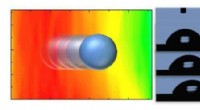
* Using complex computer models, scientists can simulate the evolution of planets, their atmospheres, and their potential for life.
These diverse methods, combined with the analysis of gathered data, are constantly expanding our understanding of the planets in our solar system and beyond. As technology continues to advance, our ability to investigate planets will become even more sophisticated, allowing us to unravel the mysteries of our universe.