Here's what makes Pan interesting:
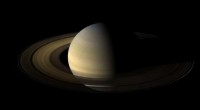
* Shape: Pan has a distinctive, "flying saucer" shape. It's flat and disk-like with a prominent central ridge, likely caused by its interaction with Saturn's rings.
* Location: It orbits Saturn within the Encke Gap, a gap in Saturn's A ring.
* Role: Pan is thought to be responsible for clearing the Encke Gap. Its gravitational pull keeps the gap clear of ring particles.
Pan was discovered in 1990 by Mark R. Showalter. It was named after the Greek god Pan, the god of the wild, shepherds, flocks, and rustic music.
It's important to note that there's no other astronomical body or concept called "Pan" in a way that's broadly used in the field.