Here's a breakdown:
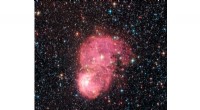
* Nebula: A nebula is a giant cloud of gas and dust in space. These clouds can be incredibly large, spanning many light-years.
* Cold: Nebulas are typically very cold, with temperatures ranging from a few degrees above absolute zero to a few hundred degrees Kelvin.
* Gas and Dust: Nebulas are made up of mostly hydrogen and helium gas, along with small amounts of heavier elements and dust particles.
There are different types of nebulas:
* Diffuse nebula: These are large, irregularly shaped clouds of gas and dust.
* Dark nebula: These are dense clouds that block light from stars behind them, making them appear dark.
* Bright nebula: These are illuminated by nearby stars. They can be categorized as:
* Emission nebula: These nebulae emit light as their gas is energized by nearby stars.
* Reflection nebula: These nebulae reflect light from nearby stars.
Nebulas are important in the process of star formation. New stars are born within these clouds as the gas and dust collapse under gravity.