1. Spacecraft:
* Orbiting Earth: Satellites and space stations circle our planet, gathering data about Earth's atmosphere, weather patterns, climate change, and more. They also serve as communication hubs and help track objects in space.
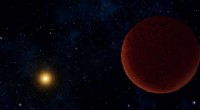
* Visiting Other Planets and Moons: Robotic spacecraft like rovers, landers, and orbiters are sent to explore other planets, moons, asteroids, and comets. These missions collect images, measure atmospheric composition, analyze rock and soil samples, and search for signs of past or present life.
* Deep Space Exploration: NASA's Voyager spacecraft are currently exploring interstellar space, sending back valuable data about the heliosphere and the vast expanse beyond our solar system.
2. Telescopes:
* Ground-Based Telescopes: Powerful telescopes like the Very Large Telescope (VLT) and the Gemini Observatory are located on Earth, allowing scientists to observe distant stars, galaxies, and other celestial objects.
* Space Telescopes: Space telescopes like Hubble and the James Webb Space Telescope are positioned above Earth's atmosphere, providing a clearer view of the universe without atmospheric distortion. They capture images of distant galaxies, observe the birth and death of stars, and study the early universe.
3. Human Spaceflight:
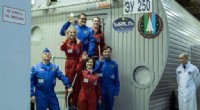
* International Space Station (ISS): Astronauts live and work on the ISS, conducting experiments, studying the effects of space on the human body, and maintaining the station. The ISS also serves as a platform for observing Earth and developing technologies for future space exploration.
* Lunar and Martian Missions: NASA is currently developing plans for human missions to the Moon and Mars, aiming to further explore these celestial bodies and advance our understanding of their history and potential for future human habitation.
4. Other Technologies:
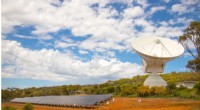
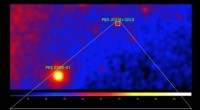
* Radio Telescopes: These telescopes use radio waves to detect signals from space, allowing scientists to study objects like pulsars, black holes, and the early universe.
* Gravitational Wave Detectors: These instruments detect ripples in space-time caused by massive events like the collision of black holes or neutron stars.
Key Goals of NASA's Space Exploration:
* Advance scientific knowledge: Explore the universe, understand its origins and evolution, and search for signs of life beyond Earth.
* Develop new technologies: Push the boundaries of technology and engineering, creating innovative solutions that benefit society here on Earth.
* Inspire future generations: Share the excitement of space exploration with the public and encourage young people to pursue careers in STEM fields.
By utilizing these diverse methods, NASA is constantly expanding our knowledge of the cosmos and pushing the limits of human exploration.