* Reflected Sunlight: Satellites are not self-illuminated. They are visible because they reflect sunlight.
* Brightness: How bright a satellite appears depends on its size, reflectivity, and distance from Earth.
* Orbit: Satellites orbit the Earth at varying altitudes and speeds. Some satellites are visible for only a few seconds, while others can be tracked for longer periods.
How to Spot Satellites:
* Look for a slow-moving, bright object: Satellites move much slower than airplanes and have a more steady, consistent light.
* Use a satellite tracking app: There are many apps (like SkySafari, Stellarium, or Star Walk) that can tell you when and where to look for specific satellites.
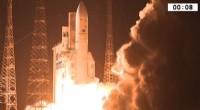
* Check for scheduled launches: Major space agencies often publish launch schedules, so you can know when to look for a new satellite in the sky.
* Look for patterns: Some satellites are part of constellations or formations, making them easier to identify.
Fun Fact: The International Space Station (ISS) is one of the brightest objects in the night sky and is often visible to the naked eye.
Enjoy your satellite spotting! 🔭🌟