Here's why:
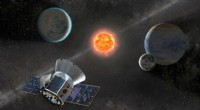
* Transit Geometry: During a transit, the planet passes directly in front of its star, partially blocking the star's light. The amount of light blocked, and therefore the depth of the dip, depends on the relative sizes of the planet and the star.
* Area Ratio: The area of the planet's shadow that falls on the star is proportional to the square of the planet's radius (Rp2). Similarly, the star's total area is proportional to the square of the star's radius (Rs2).
* Brightness Dip: The fraction of light blocked (and thus the depth of the dip) is the ratio of the planet's shadow area to the star's area: (Rp2 / Rs2).
In simpler terms: A larger planet relative to its star will block more light, leading to a deeper dip in brightness.
Other factors that can influence the dip depth (but are secondary to the radius ratio):
* Planet's albedo: The reflectivity of the planet's surface. A higher albedo (more reflective) planet will block slightly more light.
* Starspot activity: The presence of starspots (darker regions on the star's surface) can slightly affect the observed transit depth.
* Orbital inclination: The angle of the planet's orbit relative to our line of sight. A perfectly aligned orbit will produce the deepest dip.
However, the most significant factor determining the depth of the transit dip is the ratio of the planet's radius to the star's radius.