Challenges:
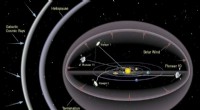
* Distance: The vast distances between stars are mind-boggling. Even the closest star, Proxima Centauri, is 4.24 light-years away. That's a journey that would take tens of thousands of years with our current technology.
* Speed: To make interstellar travel feasible, we'd need to travel at speeds approaching the speed of light, which is currently impossible.
* Fuel and Energy: Accelerating a spacecraft to such speeds would require enormous amounts of energy, and we don't have a fuel source that can provide that kind of power yet.
* Radiation: Space is filled with harmful radiation, and long-duration space travel would expose astronauts to potentially lethal doses.
* Life Support: Maintaining a life-support system for a multi-generational journey would be a monumental challenge.
Current Efforts:
* Spacecraft Propulsion: Scientists are working on new propulsion systems, like nuclear fusion and antimatter, that could potentially allow for faster travel.
* Interstellar Missions: Organizations like Breakthrough Starshot are developing plans to send tiny probes to nearby star systems. These probes would be propelled by lasers and could potentially reach their targets within a few decades.
* Astrobiology Research: The search for extraterrestrial life is also driving advancements in space exploration, as we explore the possibility of life beyond Earth and how it might travel through space.
The Future:
While interstellar travel seems like science fiction today, it's a goal that many scientists and engineers are actively pursuing. Breakthroughs in propulsion, energy, and other fields could make it a reality in the future. It's impossible to say for sure when or if we'll ever be able to visit the stars, but the quest for interstellar travel is a testament to human curiosity and ambition.