* Neutron star: This is the most common outcome for stars between 8 and 20 solar masses. The core of the star collapses under its own gravity, squeezing the protons and electrons together to form neutrons. This incredibly dense object is about 10 km in diameter.
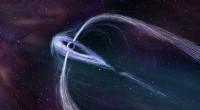
* Black hole: Stars larger than 20 solar masses often collapse to form black holes. These objects are so dense that not even light can escape their gravitational pull.
* Possibly a quark star: These are a theoretical type of star that is even denser than a neutron star, with quarks as the main constituents. There is currently no definitive evidence of their existence.
It's important to note that the exact outcome of a supernova depends on several factors, including the star's initial mass, composition, and rotation rate. However, the most likely outcomes are a neutron star or a black hole.