Here's what we know:
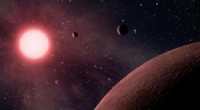
* Thousands discovered: Scientists have confirmed the existence of thousands of exoplanets.
* Diverse range: They come in a wide variety of sizes, masses, and compositions. Some are gas giants like Jupiter, others are rocky like Earth, and some are even "super-Earths" or "mini-Neptunes" that don't have counterparts in our solar system.
* Different orbits: They orbit different types of stars, including red dwarfs, sun-like stars, and even binary star systems. Some exoplanets even orbit very close to their stars, while others are far out.
The discovery of exoplanets has revolutionized our understanding of planetary systems and the universe. It shows that our solar system is not unique, and that planets are incredibly common throughout the galaxy.
There is still much to learn about exoplanets, and scientists are continuing to discover and study them using various methods, including:
* Transit method: Detecting dips in a star's brightness as a planet passes in front of it.
* Radial velocity method: Detecting the "wobble" of a star caused by a planet's gravitational pull.
* Direct imaging: Taking pictures of exoplanets directly, though this is very challenging.
The exploration of exoplanets is an exciting field of research that could ultimately help us answer some of the biggest questions about the universe, like whether we are alone or if other planets could potentially harbor life.