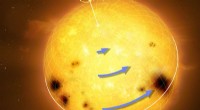
1. A planet *forming* too close to the sun:
* Extreme heat: The intense heat from the sun would vaporize any solid materials that might form a planet. This is why we see a distinct gap in the asteroid belt: the inner solar system is just too hot for rocky planets to form.
* Solar wind stripping: The sun's powerful solar wind would blow away any atmosphere a forming planet might develop.
2. A planet *existing* too close to the sun:
* Extreme temperatures: Planets close to the sun experience very high surface temperatures. Mercury, the closest planet to the sun, reaches over 800°F (427°C) during the day.
* Tidal locking: Planets close enough to their star experience strong tidal forces, which can lead to tidal locking. This means the planet's rotation period becomes synchronized with its orbital period, resulting in one side always facing the star (like the Moon with the Earth).
* Greenhouse effect: A dense atmosphere can lead to a runaway greenhouse effect, where the planet traps heat and becomes incredibly hot, potentially leading to a Venus-like scenario with a very hot, dense atmosphere.
3. A planet *colliding* with the sun:
* Destruction: A planet colliding with the sun would be a cataclysmic event, completely vaporizing the planet and releasing a massive burst of energy. This is extremely unlikely to happen naturally.
In summary:
* Planets forming too close to the sun will likely not form at all due to the intense heat and solar wind.
* Planets existing too close to the sun will experience extreme temperatures, tidal locking, and potentially a runaway greenhouse effect.
* A planet colliding with the sun is extremely unlikely but would be an immensely destructive event.
Let me know if you have any other questions!