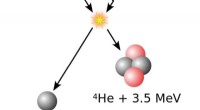
1. Main Sequence: The star spends the majority of its life fusing hydrogen into helium in its core, like a giant nuclear furnace. This stage is called the "main sequence."
2. Red Giant: As the hydrogen fuel runs out, the core contracts, heats up, and starts fusing helium into carbon and oxygen. This causes the outer layers of the star to expand dramatically, turning it into a red giant.
3. Planetary Nebula: The red giant eventually sheds its outer layers, which form a beautiful, glowing cloud called a planetary nebula. This nebula is not related to planets, but rather the shape of the expanding gas resembles a planet in some cases.
4. White Dwarf: The core of the star, now made mostly of carbon and oxygen, is left behind. It's a very dense and hot object called a white dwarf. It continues to cool and fade over billions of years.
Key points about white dwarfs:
* Extremely dense: They are roughly the size of Earth but contain the mass of our Sun.
* No fusion: They are not actively fusing elements anymore.
* Cooling down: They slowly radiate away their heat, eventually becoming black dwarfs.
So, a medium-mass star like our Sun will end its life as a white dwarf, a beautiful and fascinating remnant of a once-mighty star.