1. The Big Bang:
* The universe began as an incredibly hot and dense state.
* Within fractions of a second, the universe rapidly expanded, cooling and creating the first particles – mostly hydrogen and helium.
2. The Formation of Galaxies:
* Over millions of years, these particles clumped together due to gravity.
* These clumps continued to attract more matter, eventually forming vast clouds of gas and dust called nebulae.
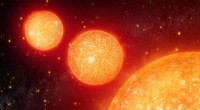
* Within these nebulae, gravity further concentrated matter, leading to the birth of stars.
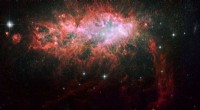
* Stars gathered in clusters, eventually forming the first galaxies.
* Galaxies continue to grow by attracting more gas, dust, and even smaller galaxies.
3. The Formation of Planets:
* Within a nebula, as a star begins to form, a disk of gas and dust rotates around it.
* This disk contains heavier elements, including rocky material, ice, and gases.
* Gravity causes particles in the disk to clump together, forming planetesimals.
* Planetesimals collide and merge, growing larger until they become planets.
Key Factors Influencing Formation:
* Gravity: The primary force driving the accumulation of matter.
* Density Fluctuations: Tiny variations in the density of the early universe provided the initial seeds for gravitational collapse.
* Angular Momentum: The spinning motion of the nebula, which gave birth to the rotating disks where planets formed.
* Stellar Evolution: The energy and radiation from stars influence the composition and evolution of the planets around them.
Important Notes:
* This process is incredibly complex and involves numerous interactions and feedback mechanisms.
* The formation of planets is not a guaranteed outcome for every star; some stars form without any planets.
* There are different types of galaxies and planets, each with its own unique characteristics and formation history.
Ongoing Research:
Scientists continue to study galaxy and planet formation through observations and computer simulations. These studies help us understand the origins of our universe and the conditions necessary for life to arise.