Challenges with Traditional Methods:
* Radial Velocity (Doppler) Method: This method looks for wobbles in the star's motion caused by the planet's gravity. Face-on orbits produce minimal radial velocity, making them difficult to detect.
* Transit Method: This method looks for dips in the star's brightness caused by the planet passing in front of it. Face-on orbits don't cause transits, making them invisible to this method.
* Astrometry: This method measures the tiny wobble of a star caused by the planet's gravity. Face-on orbits produce a wobble that's perpendicular to our line of sight, making them difficult to detect with current technology.
A Potential Method: Direct Imaging:
While difficult, direct imaging could offer a chance. Here's how it works:
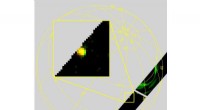
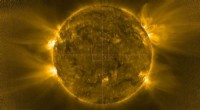
* Blocking Starlight: Advanced telescopes use a coronagraph to block out the star's intense light, allowing faint objects like planets to be seen.
* Sensitive Instruments: Specialized cameras and adaptive optics help to sharpen the image and detect faint light from planets.
* Observing in Infrared: Infrared light can penetrate dust and gas around the star, making it easier to detect planets.
Challenges of Direct Imaging:
* Faintness: Planets are significantly fainter than their host stars.
* Distance: Planets are very small compared to the immense distance from Earth.
* Atmospheric Distortion: Earth's atmosphere distorts images, making it difficult to distinguish a faint planet from noise.
Conclusion:
Detecting face-on planets is a challenging task, but direct imaging with advanced technologies may offer the best chance. Even with direct imaging, success is far from guaranteed, especially for planets in the habitable zone of their stars.